NATO Strategic Direction & Krypteia – South: The Spread of al-Shabaab

NATO’s Strategic Direction – South in Naples, in conjunction with Krypteia, an East Africa-based research company, and Dr Harmonie Toros of the University of Kent, has published a fascinating new paper on al-Shabaab’s international agenda. https://thesouthernhub.org/publications/nsds-hub-publications/the-spread-of-al-shabaab-from-somalia-to-kenya-and-beyond

The paper can be downloaded here

Krypetia is a Somali woman owned business that was set up in 2014 and originally focused on translation between Somali, Swahili and English. Since then the company has expanded its activities significantly and now provides a range of services including media production, facilitation across East Africa and the Horn and specialist insight, with a particular focus on gender and CT & P/CVE. Client include the UN, the EU, the British Embassy Mogadishu, academia and the private sector, including private security providers. Krypteia recently provided two chapters (‘Women in al-Shabaab’ & ‘Negotiations with al-Shabaab’) in the UN’s War and Peace in Somalia collection.

Contact Krypetia on krypetiain@gmail.com

Hmmm… – 2

joesaccoonsatire1200

On the anniversary of the Charlie Hebdo attacks, by far the best and most balanced, insightful response I saw at the time was cartoonist, Joe Sacco’s ‘On Satire’. By all means post ‘Je Suis..’ or colour in your F*c*book profile pic – but they don’t require deep thought about what is really going on.

Poets, not Athletes

o-SANDY-HOOK-ART-570

‘Someone asked me, what would have been the make-up of your ideal platoon – athletes? No, I said: poets.’

  Sydney Jary, WW2 Platoon Commander

At times like these I would suggest we might do better to listen to the poets, rather than the politicians, the soldiers, the commentators et al. With that in mind, my favourite living poet, Warsan Shire, in the aftermath of the London riots:

what they did yesterday afternoon, by warsan shire

they set my aunts house on fire

i cried the way women on tv do

folding at the middle

like a five pound note.

i called the boy who use to love me

tried to ‘okay’ my voice

i said hello

he said warsan, what’s wrong, what’s happened?

i’ve been praying,

and these are what my prayers look like;

dear god

i come from two countries

one is thirsty

the other is on fire

both need water.

later that night

i held an atlas in my lap

ran my fingers across the whole world

and whispered

where does it hurt?

it answered

everywhere

everywhere

everywhere

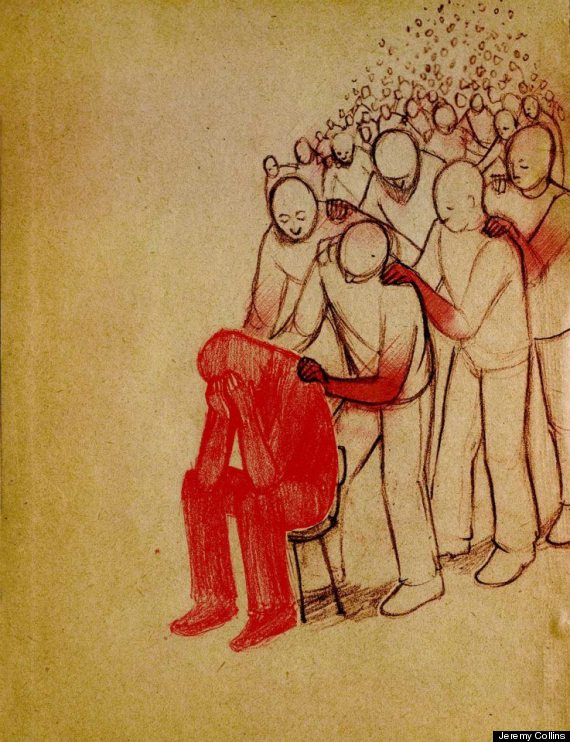
Title image is ‘Response to the Sandyhook School Massacre’ by Jeremy Collins

Everything Ends in IS

The Islamic State Releases a Confusing Video of its new al-Shabaab Members

IMG_1318

I was speaking to a group of military men a few days ago, playing the age old soldierly game of wargaming: not with little metal soldiers, but sitting around, beer in hand, working through scenarios.

In this case, we considered the fate of al-Shabaab. The group’s leader, Diriye, is killed: IS takes over. Al-Qa’ida’s Zawahiri dies: IS takes over. Al-Shabaab descends into a civil war over allegiance to al-Qa’ida or IS: IS takes over. Everything ended in IS.

I disagree. Being an only child, I’ve always found being contradicted hard to take.

But my fellow wargamers proved hard to shift in their beliefs – understandable, when the presence of the Islamic State is fundamental to your existence (armies need enemies to fight, after all) and Islamic State presence means more budget for fighting that particular bogeyman.


This was still preying upon my mind last night (being an only child, I dwell on things), when the Islamic State, through its media house, ar-Raqqah, released a video product celebrating the shift of allegiance by a group of al-Shabaab members led by the ideologue, Mumin.

The video is short, running to just under seven minutes (compared with al-Shabaab products released through al-Kutaib, which run up to 90 minutes.)

IMG_1301

Sexy M4 with fore grip and light unit – you don’t see many of them in Somalia

The first three speakers are all in Iraq/Syria (although this is never stated, allowing for the assumption to take hold that this is all set in Somalia). The talking heads switch between Somali and Arabic, quote from the Q’ran. They provide a religious argument for mutiny, explicitly asking aS fighters to leave ‘the battlefield’ if al-Shabaab’s leaders refuse to let them shift their allegiance. But they speak poor Somali – Diaspora, possibly never having set foot in Somalia itself. (This not the first time the Islamic State have commited a faux pas in their messaging to Somalia. See Do We Want al-Shabaab to Join the Islamic State?)

IMG_1303

Sexy MP5 and a sprinkler in the background –                                                           don’t see many of either of those in Somalia

Their weapons are sophisticated (an MP5, an M4 with a foregrip and a sexy sight unit) – too sophisticated for Somalia. There is a sprinkler in the background of one shot – you don’t see many sprinklers in Somalia.

IMG_1305

Fighters follow a man carrying an Islamic State flag through some bushes

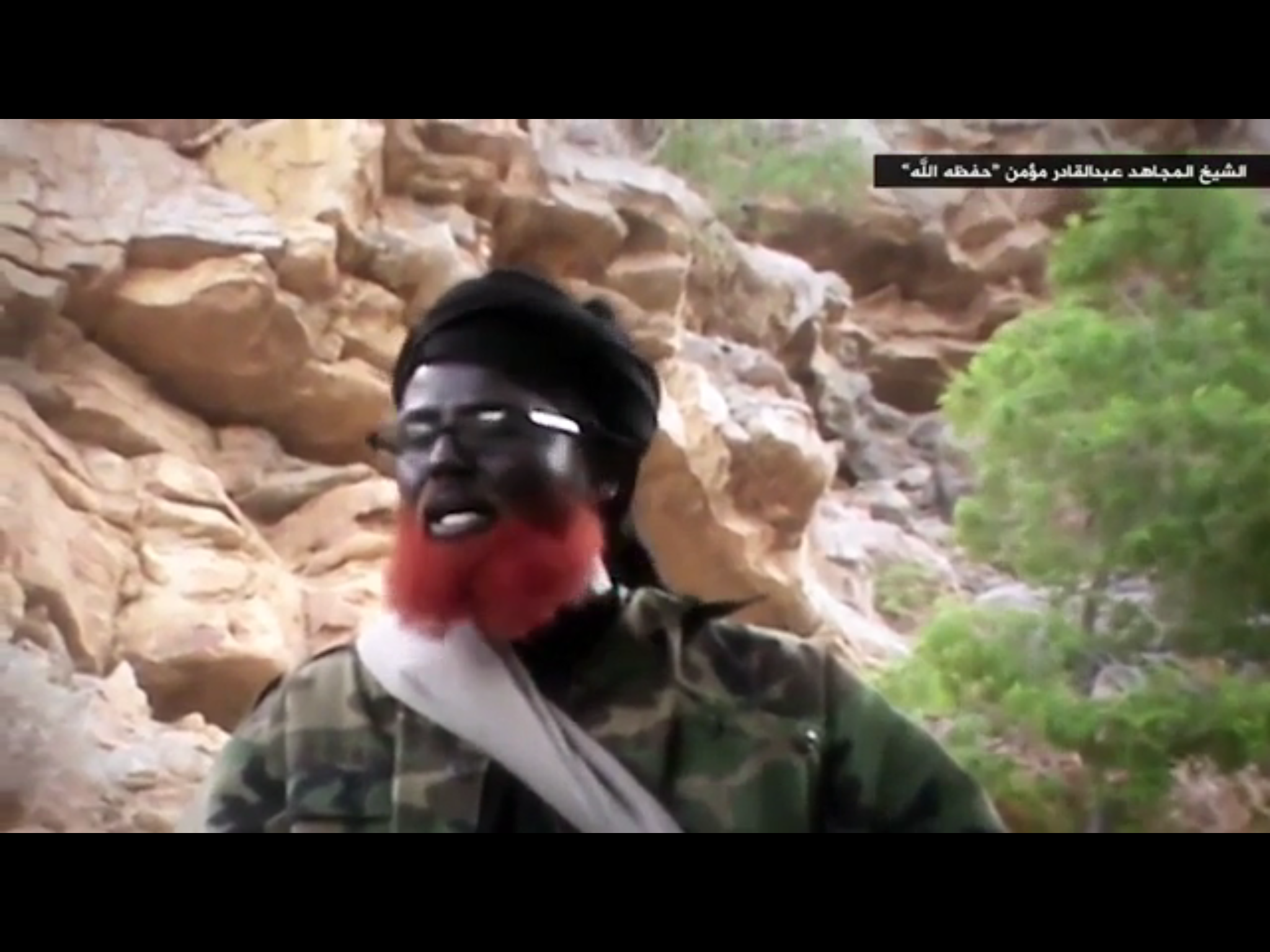
The production quality shifts dramatically down and fighters with faces covered are shown wandering through the bush (well, some bushes), following a flag-bearer, swearing allegiance – they might be in Somalia. (It is also reasonable that they should cover their faces given the ongoing Amniyat purge of Islamic State supporters.) The terrain could be the Galgala mountains. Or it might not.


Mumin, who leads the al-Shabaab-Islamic State faction 

Mumin himself appears, but this is a lift from his original video statement.

IMG_1314

Group shot – 27 fighters, which matches the number of Mumin’s group 

Then group shot: there are 27 fighters and, adding those recording, this could be the group of fighters who fled with Mumin. But where is Mumin, then? (Perhaps he was the one filming. I suspect not.) The video ends with a few fighters watching an Islamic State video on a laptop.

IMG_1315

Watching an Islamic State video product on a laptop


The product feels wrong, as wrong as al-Shabaab feels within the context of the previously moderate, Suffist Somalia.  Too often there is a ‘could be…’

But it is probably convincing enough for those who haven’t developed fingerspitzengefuhl for all things Somali. Or for those who have their conclusions pre-formed.

And that is dangerous. This is a period when the Islamic State might be changing form and becoming an international terrorist organization, rather than a territory-focussed entity. (Although that assumption is based on events over Sinai, and I might be the one with the prepared conclusions. But I’m not the only one.)

There is a battle going on right now in Somalia, but the battle is not the Islamic State trying to control Somalia. It is between factions within al-Shabaab, young and old, globalists and nationalists, foreign fighters and Somalis, Diaspora and homelanders, even. (And there is also a battle going on between the Somali government and their international partners against al-Shabaab.) Unless there is a widening of the strategic view of those in the military, in government, in the media, the elements of the international community who might actually have some influence over events, then this scenario might well end in IS after all.


Al-Shabaab’s Da’esh Problem

Mumin

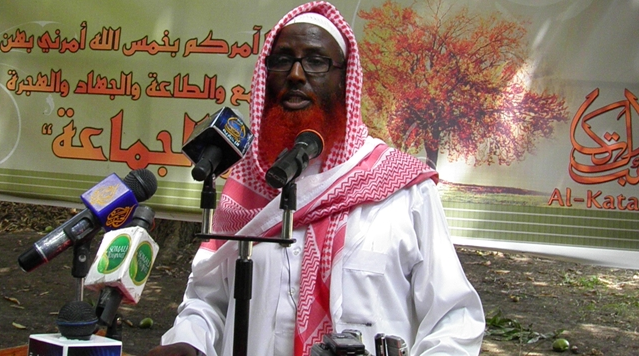
Abdul Qadir Mumin, who swore allegiance to the Islamic State/Da’esh on Thursday

There have been rumblings of a shift of allegiance by al-Shabaab from al-Qa’ida to the Islamic State/Da’esh for some time. In February, for instance, there media reported that a senior leader, Karate, was strongly in favour of the move, in direct opposition to the relatively new and unestablished leader of al-Shabaab, Diriye. (The story was grossly exaggerated, though, claiming that, in a moment of tension in the discussion, Karate had threatened to behead Diriye: while authentically Da’esh, the likelihood of even a senior leader making such a threat and surviving is very unlikely.)

During the Holy Month of Ramadan, the rumour appeared again, with claims of an announcement of the change of allegiance to come at Eid al-Fitr. But it didn’t. Eid al-Adha brought a different, albeit indirect message, hidden within a video product focused on al-Shabaab’s attack on the Burundian camp in Leego: quotations from Usama Bin Laden, but also from Ayman al-Zawahiri, the current leader of al-Qa’ida. Al-Shabaab was never going to answer the rumours directly, but this concluded the discussion.


Except that it didn’t conclude the discussion. Abdul Qadir Mumin, a relatively well known al-Shabaab religious ideologue, declared his allegiance via an audio message on Thursday evening along with 20 of his followers, somewhere in Puntland.

‘Da’esh has an appeal,’ says a chum in the Somali intelligence community. ‘Da’esh are Manchester City right now, al-Qa’ida are… Born. Mouth.’ (Ah, Bournemouth, I realise after a moment.) ‘The young people, the footsoldiers, and the foreign fighters, they are taken by Da’esh, by their daring, by their media. Al-Qa’ida is for the old men.’

Foreign fighters can mean both non-Somalis but also Somali Diaspora. Which does he mean?

‘A group of foreigners declared in the mosque a few weeks ago, two Arabs and three Kenyans. In a village somewhere between Barawe and Jamame, where they have no internet, no television or radio. They didn’t know what was happening and they were arrested by the Amniyat.

‘But it is not just foreigners – another groups, Somalis, all from the same clan, they decalred their allegiance to Da’esh and are strong enough with their own clan militia that al-Shabaab has sent religious men to negotiate with them.’ (Where? Near Jilib, also in the hinterland between Mogadishu and Kismayo.)

(This raises an interesting point, the clan dynamics of al-Shabaab. As much as the group claims to be above clan, no Somali is not influenced by clan and al-Shabaab itself regularly mediates in clan disputes, using the ancient system to their advantage. And as much as al-Shabaab has representatives of virtually every clan within its ranks, the leadership of al-Shabaab, the Shura Council, is dominated by one clan. It was only a matter of time before the clan issue appeared.)

So this isn’t a one off. There are elements within al-Shabaab, not just one isolated group, but groups of foreigners, Somali Diaspora and ‘real’ Somalis, swearing allegiance to Da’esh. The response from al-Shabaab depends on how strong the individual group is. For now, at least.


Kulwa, an al-Shabaab leader in Puntland, condemns Mumin’s move and states that al-Shabaab will fight anyone who opposes ‘the movement’. This is a standard approach by al-Shabaab, low level responses first: a tweet here, a statement to local media there. Al-Shabaab then assesses the response. If the story goes away, they leave it at that. But if the story is ‘sticky’, they respond commensurately: a more senior leader responds, a statement might be issued, it might even go all the way up to Diriye if required. (‘If only the government adopted that approach,’ my intelligencer acquaintance wryly comments.)

But al-Shabaab isn’t just about communications. It is also about deeds.

In 2013, when Godane purged al-Shabaab of those who opposed his ideology of the Global Jihad and his alliance with al-Qa’ida, there were no Tweets or statements. Al-Shabaab’s actions spoke for themselves, and there is no reason to doubt that al-Shabaab won’t adopt a similar course in the coming months against its errant, vacillating members.

Al-Shabaab’s Eid Message: the Attack on Leego

Al-Shabaab’s latest video, produced by al-Qa’ida, reminds us of some old lessons and also teaches us some new ones.

The Attack Begins with the detonation of a Suicide Bomber

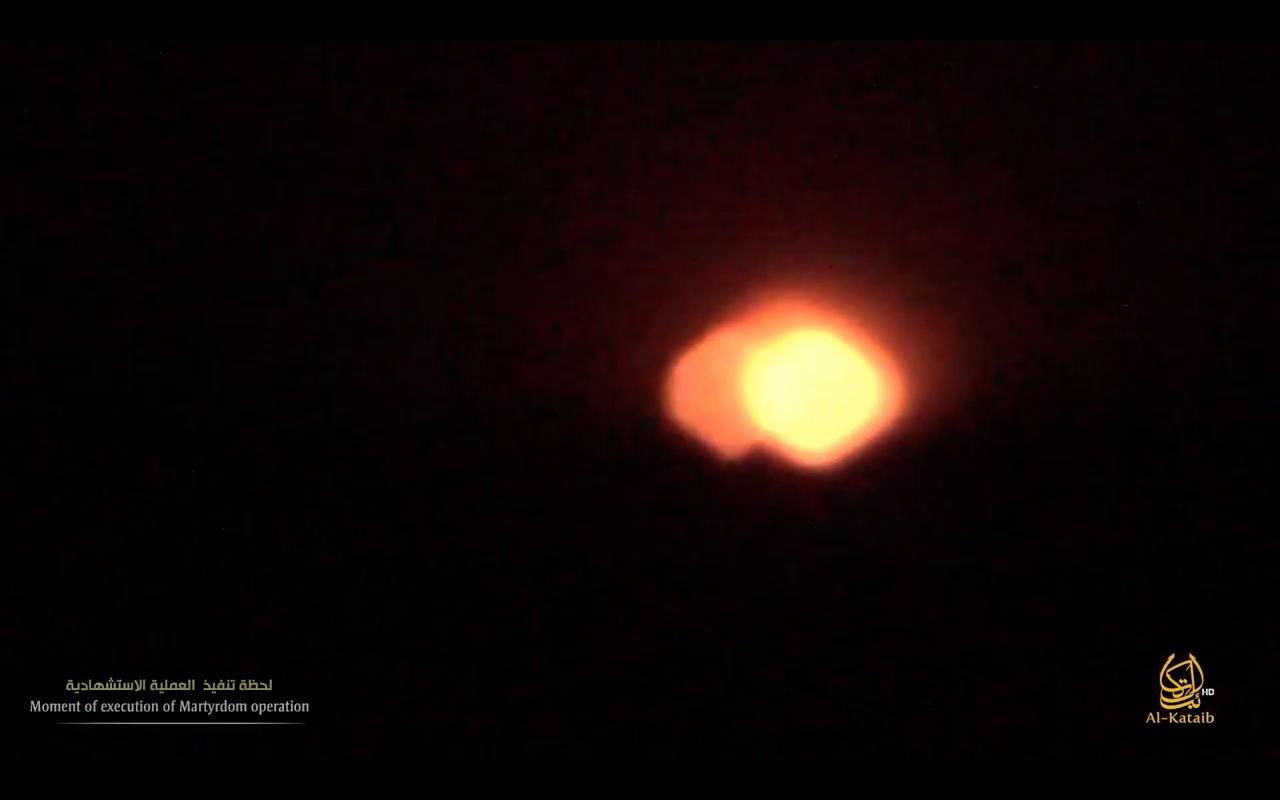
A suicide attacker initiates the attack on the AMISOM base in Leego


It’s sometimes hard to tell if al-Shabaab’s timing is as intentional as the media sometimes interpret it to be. Was the attack on Ugandan troops serving with AMISOM in Janaale on September 1st really in memoriam Godane, marking the first anniversary of his death in a drone strike? Was Monday’s attack near the perimeter gate of Villa Somalia really meant to coincide with the anniversary of Westgate? And was Thursday’s release of the obligatory video product that follows every major attack, this time of an attack on Burundian troops under the AMISOM flag in Leego, really al-Shabaab’s message for the people at the time of Eid al-Adha?

It doesn’t matter, of course, because whether it was or wasn’t, that is how social meeja and subsequently the media have interpreted it. And perception is reality, some say.

Once again the video product was produced by al-Kutaib, al-Qa’ida’s production house. Once again, al-Shabaab and Somalia provide the cast and the set for the ailing al-Qa’ida studio. The quality is consistently improving: there are at least three different cameramen (occasionally filming each other – how very Vice) and the editing is slick, with lots of split screens and the like. The subtitling again is in English and Arabic. The product as a whole is tighter, too, only 27 minutes this time, as opposed to the sprawl of some previous products, notably the 90 minute ‘Western Shopping Mall’ product (that fleetingly mentioned western shopping malls). It is undeniably exciting to watch the attack unfold, as graphic as the violence is and as ambivalent the thrill might be.

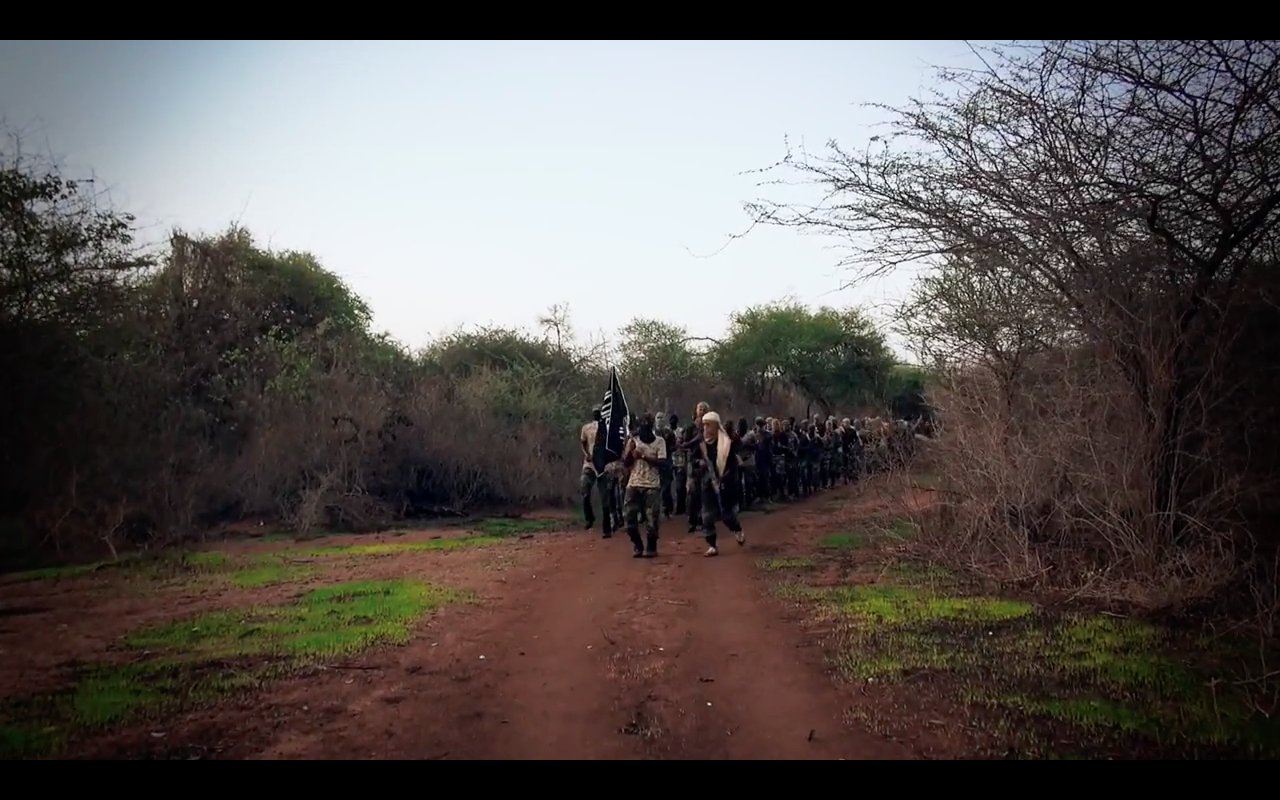
aS Parade Prior to Leego Attack

Al-Shabaab footsoldiers parade prior to the attack on the AMISOM base in Leego

The video itself begins and is subsequently punctuated by a series of inspirational comments from Osama Bin Laden, Godane and Zawahiri. Various scarfed footsoldiers prance around for a while but any comic value (they make the Italian Army on parade look intimidating) is lost when the camera pans out to reveals hundreds of fighters. A lengthy interview with a combat medic who has decided Allah has a greater role for him sings a song, looks wistfully into the distance.

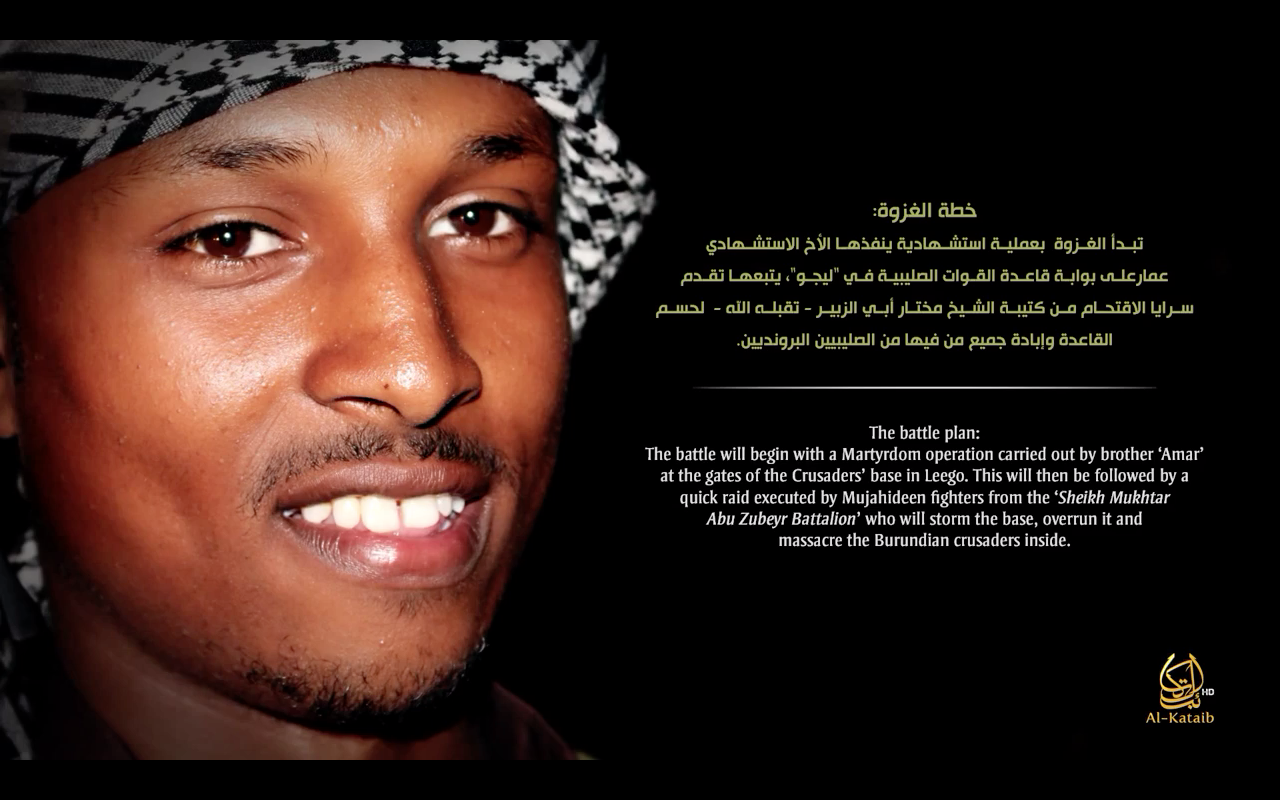
A Lengthy Interview with the Suicide Attacker Who Initiates the Attack

A suicide attacker, eulogised, initiated the assault on the AMISOM base

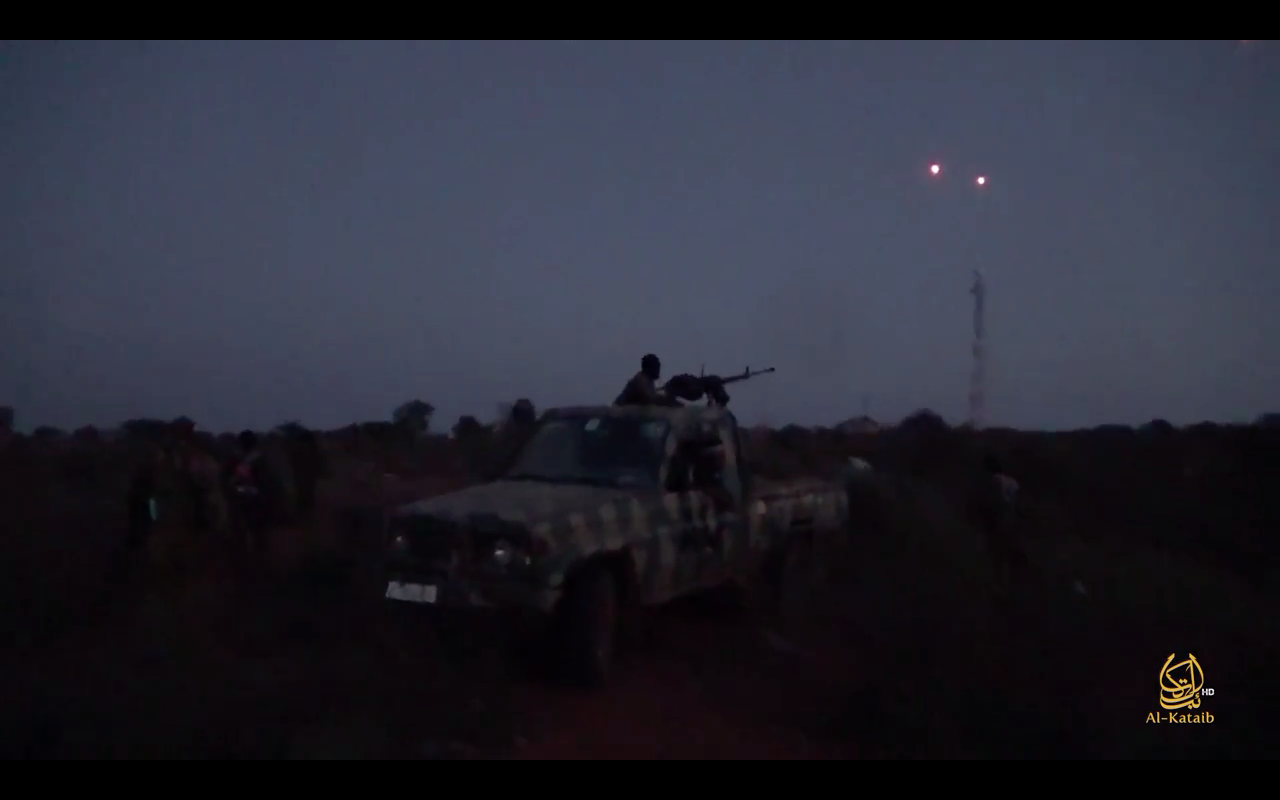
Darkness falls, broken first by the flash of the self detonation of the healer-turned-killer in the distance, then webs of tracer rounds from 7.62mm PK light machine guns and then the heavier 12.7mm Dushkas, mounted on the backs of 4×4 ‘technicals’. (A sharper eyed/more spotterish colleague spies even heavier ZSU 23mm anti-aircraft cannon mounted on technicals too. There are at least four different technicals involved, possibly more.)

Technical Mounted Heavy Weapons During the Assault

One of the many technicals mounting heavy weapons that were used in the Leego attack

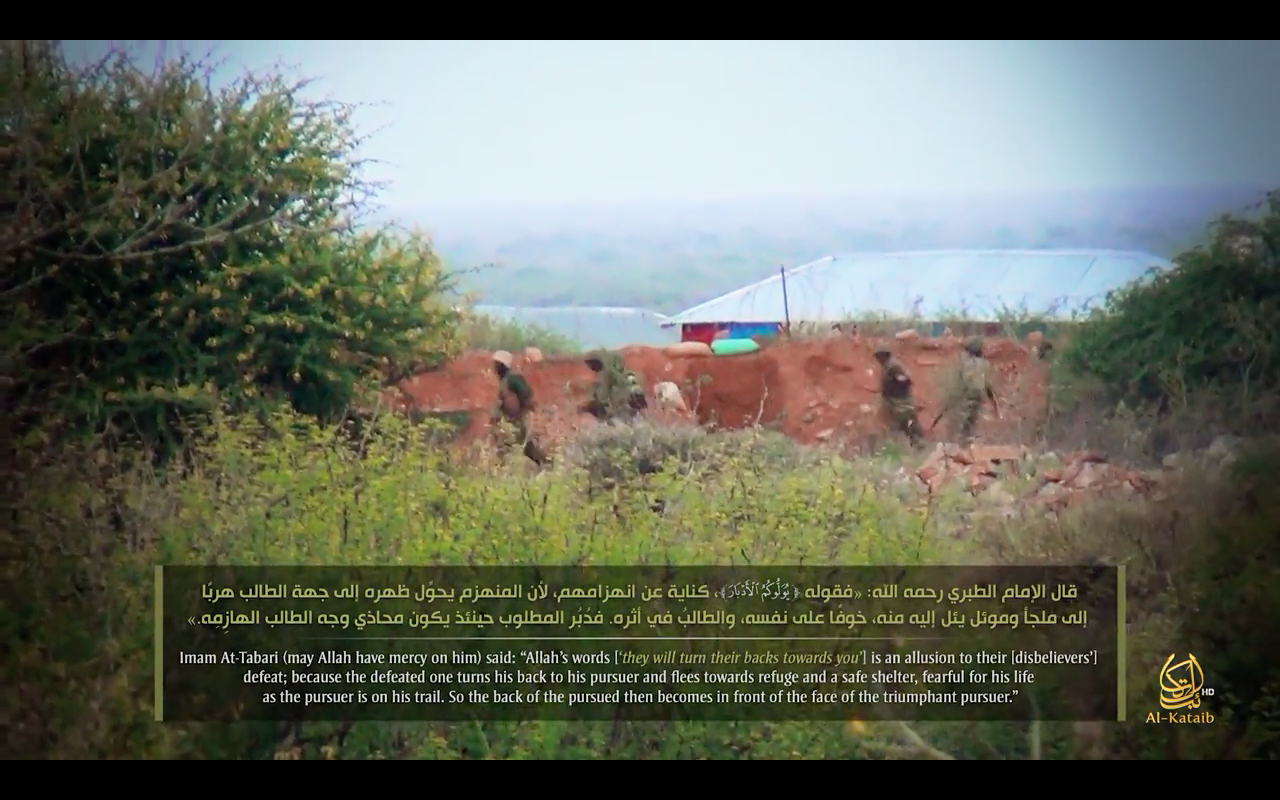
The assault itself takes place, strangely lacklustre after the build-up and the previous video products. Burundian troops are seen in the distance, in a mixture of states of dress, confused and meandering around entrenchments aimlessly.

Burundian Troops Move Along a Trench System

Burundian troops under fire meander along a trench

Sniper Shot

A sniper targets a Burundian soldier: probably a post-event overlay

The Burundian Church is Destroyed

The Burundian church is destroyed

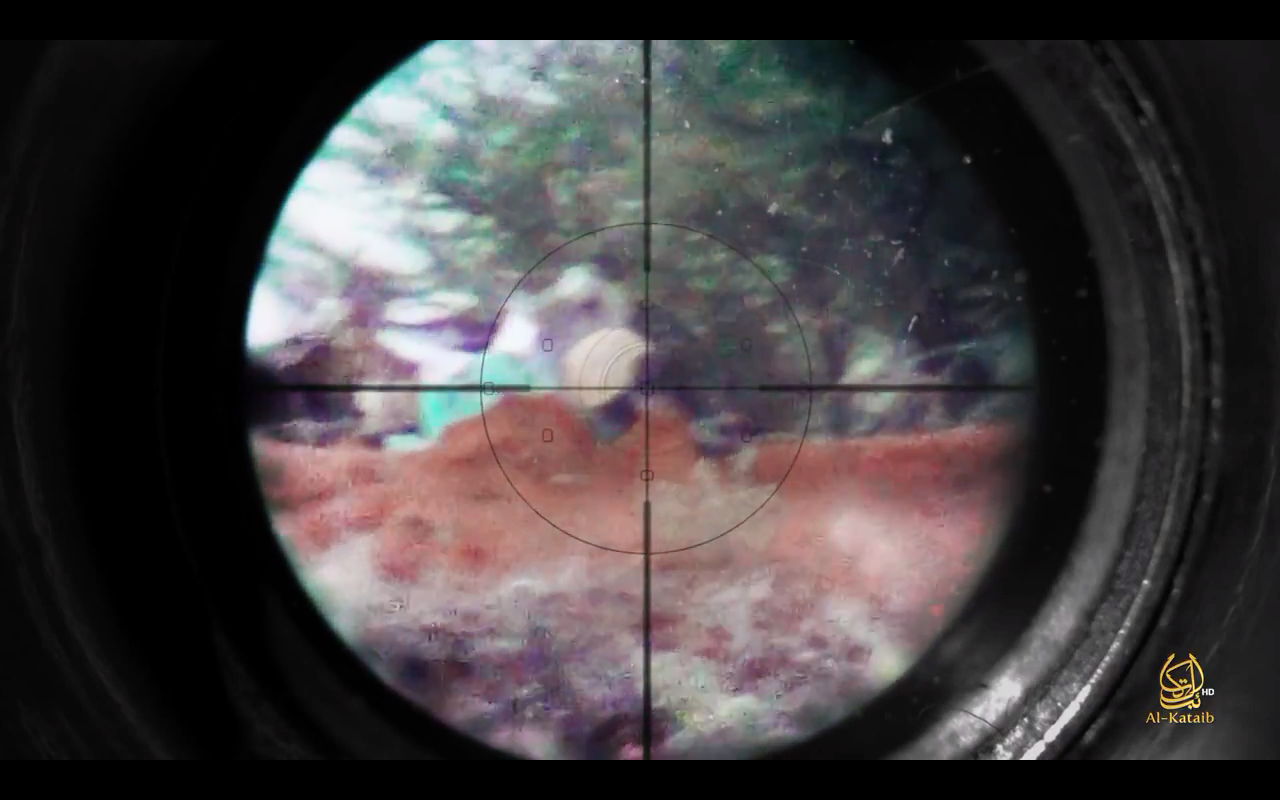
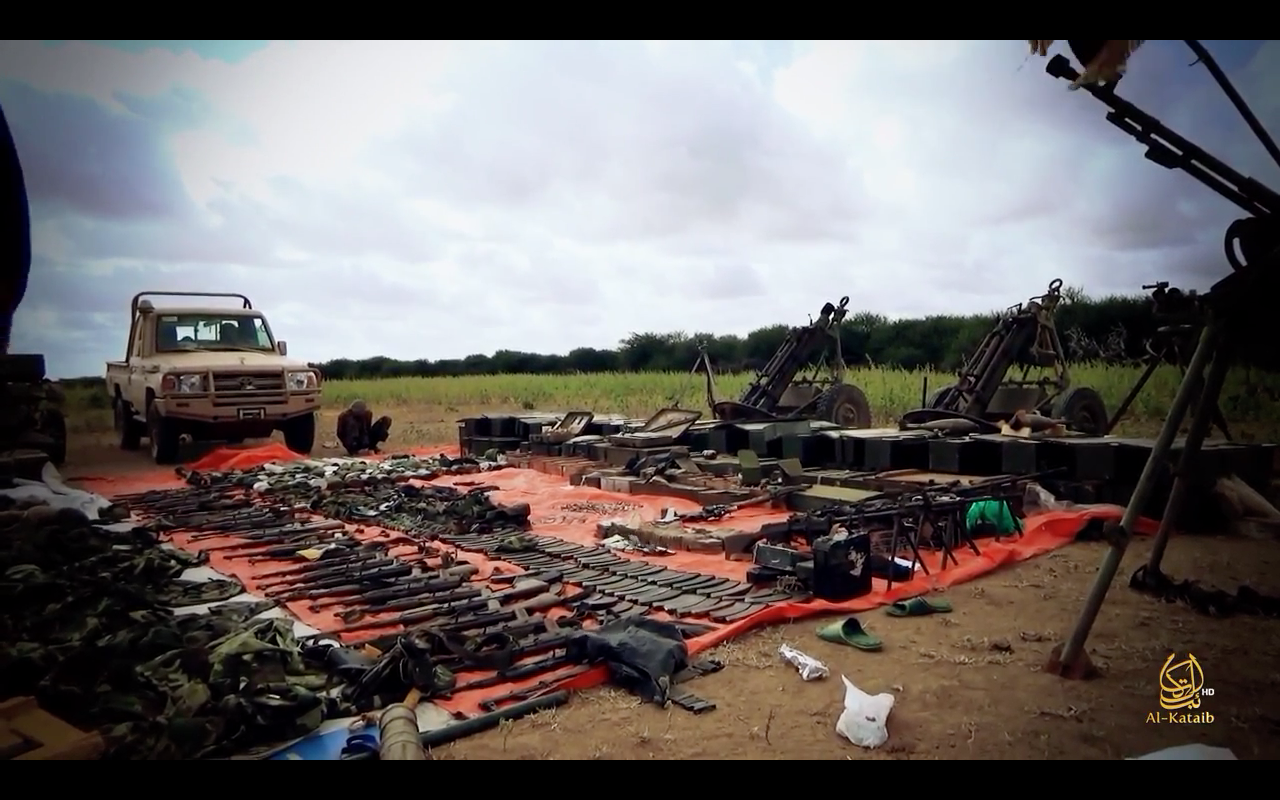
It is after the assault that the most striking images appear: a sniper scope view of a Burundian killed by a headshot, so derivative of many similar clips produced in Iraq; the destruction of the Burundian church tent, the cross stomped upon until it splinters; the seizure of quantities of ammunition, weapons (including heavy mortars), AMISOM uniforms and Burundian rank-slides; and finally, dead bodies. Many dead bodies.

Captured AMISOM Burundian Uniforms and Rank Slides

Captured AMISOM Equipment including Heavy Mortars and Ammunition

Significant quantities of arms, ammunition and uniforms were seized in the attack

Bodies are finished off with headshots; a series of single images of corpses build into a cascade, designed to justify the assertion that 80 Burundians were killed in the attack; bodies are strung together and dragged behind a technical.

Many of the messages from this video are not new. The video shows once again that al-Shabaab can concentrate large numbers of troops and weapons systems against isolated positions, seemingly at will. We knew this in December, when al-Shabaab attacked Interim Jubba Authority troops on Kodhay Island, but now the focus is on AMISOM. We also know that al-Shabaab will always produce a communications output from their operations and it is likely that they may even design their operations around the communications output. We also see that AMISOM, while they certainly outclass al-Shabaab in the offence, are weak in defence. The fact that al-Shabaab can mass vehicles and fighters and assault AMISOM positions with impunity shows that AMISOM has not yet adjusted to the physical terrain or to counter-insurgency: no aggressive foot-patrolling, no dominating ground, no exploitation of the technical advantage, no offensive spirit, obviously no support amongst the local population: all the tactics you would expect in rural counter-insurgency.

But there are is a new, albeit indirectly stated message: al-Shabaab’s allegiance remains with al-Qa’ida. Any doubt about that is confirmed by the fact that it is not just Bin Laden who is quoted in the video, but also Zawahiri. The media flurry around al-Shabaab’s supposed shifting of allegiance to the Islamic State can now be seen to be a red herring, although it allowed the Daily Mail to fill a few pages with pictures of Samantha Lewthwaite and stills from the latest ‘ISIS-style’ video release by al-Shabaab (who were producing such video products long before the Islamic State came into being).

One final, ominous thought. Al-Shabaab is releasing video products somewhere between 6 weeks and 3 months after each major attack. That means we can expect a video product based on the assault on the Ugandan-manned AMISOM base in Janaale earlier on September 1st (in memoriam Godane) in the coming weeks. That incident, rooted as it was in the loss of confidence of the local community after the massacring of members of a wedding party in nearby Marka (which in turn was in revenge for an IED attack on AMISOM forces) will once again cast doubts on AMISOM’s ability to operate in the rural environment. The subsequent confusion in reporting (12 dead, say Uganda; 25 dead say local sources; 50 dead say al-Shabaab), compounded by claims and counter claims of Ugandan hostages taken, prepares the ground for al-Shabaab’s next video. It is a sorry state of affairs when we have to rely on al-Shabaab to provide clarity on what is going on in the hinterland of southern and central Somalia.

POLICY: out of respect to fallen combatants and on the grounds of decency this site does not carry graphic imagery. If you wish to view the video for research, please send a request via the comments section below. 

Do We Want al-Shabaab to Join the Islamic State?

The Daily Mail Certainly Seems to.
Tom Evans DeadWannabe hero of the Glorious Jihad, Tom Evans – now brown bread

“When you have to choose between the truth and the legend, choose the legend.”

                                                                                                            John Ford

The rumour of a high level meeting in Jilib in southern Somalia of al-Shaabab’s leadership has been rattling around Mogadishu for a few days. On the agenda is a discussion of what to do after the loss of the thin stretch of territory al-Shabaab still holds (something like 20% of South/Central Somalia, from what was once 80%) to impending military operations by Ethiopian and Kenyan forces operating under the African Union Mission in Somalia (AMISOM) mandate.

Al-Shabaab has concentrated its 2015 Ramadan campaign on AMISOM bases in the hinterland of the country and on civilian centres in northern Kenya, ambushing an Ethiopian convoy on June 17th and over-running a Burundian base in the town of Leego on June 26th. It has, once again, mounted a successful strike on the Kenyan border town of Mandera and a failed attack on a Kenyan military base in Lamu County.

Al-Shabaab must have realised that such attacks would draw a response, particularly from the Ethiopians. And so they have, with 3000 Ethiopian troops and their local allies, the Somali Ahla Sunna wa Juma militia assembling near some of the few remaining al-Shabaab strongholds and Kenyan conducting airstrikes against targets in Gedo in southern Somalia (the Kenyans are less inclined to engage in a direct fight than their Ethiopian comrades – and perhaps have less trust in their local partners as a fighting force).

Perhaps this is what al-Shabaab wanted, to draw the Ethiopians and the Kenyans in, hoping to play on the historic and instinctive dislike of the Somalis for their neighbours and the perhaps inevitable ‘over-zealousness’ that sometimes comes with an AMISOM offensive, grist to al-Shabaab’s propaganda mill.

Or perhaps al-Shabaab isn’t operating in as unified a manner as we sometimes assume and the leadership have to meet to deal with unintended consequences. It’s a mistake we often make, assuming the other side fight, command, communicate and behave as we would.

Additionally, at the end of the meeting agenda, just before ‘AOB’, is the subject of a transfer of allegiance from al-Qa’ida (to whom the then leader of al-Shabaab, Godane, swore allegiance in 2012) to the Islamic State, or Da’esh.

The shift of allegiance to IS is a longer running rumour, stretching back to late February of this year. One senior leader, Karate, is an apparent proponent of the shift, supported by many of the younger membership of al-Shabaab. Godane’s successor, Diriye, however, remains loyal to his predecessor’s pledge to al-Qa’ida and the majority of the older leaders are with him.

But this week the rumour grew legs, picked up by the UK Daily Mail with the splash headline, ‘Somalia Terror Group al-Shabaab ‘to Pledge Loyalty to ISIS’ in Terrifying Expansion of the Caliphate’, according to a ‘source within al-Shabaab’ (there are quite a few of those – in the same way there were a lot of ‘sources within Somali pirate gangs’, who turned out to be Somali-Kenyan chancers, duping journalists for a giggle and a bit of spare cash).

The Daily Mail story itself was thin, based on local media reports of the impending meeting. But then fast forward: and the meeting has already happened and the deal is already done: al-Shabaab will swear allegiance to Da’esh.

Then the numbers start to ramp up – al-Shabaab’s 9000 troops (the largest estimate anyone actually in Somalia has come up with is 6000, most of whom are sympathisers, hangers on and facilitators – al-Shabaab’s combat strength is 1500 at most) conducted 150 attacks in June (which would be a rate of 5 a day – but unfortunately only about 20 seem to have been noticed by anyone, including the local media).

Da’esh’s wooing of al-Shabaab through a video appeal then takes to the stage – although surprisingly without reference to the fact that the video appeals to members of al-Shabaab to leave the group and travel to Syria to join IS, nor to the fact that the cool shades-sporting leader of the group featured in the video, Taymullah as-Somali, is actually blind, nor that his sidekick, Abu Hamza, can barely speak Somali.

And then the finale – the obligatory appearance of foreign fighters at the peak of the al-Shabaab feudal pyramid. Because Somalis, of course, couldn’t run an insurgency or a terrorist campaign without a whitey to guide them, could they?

2A67D6F400000578-3156072-White_Widow_British_born_Samantha_Lewthwaite_pictured_the_widow_-a-40_1436533468082

Samantha Lewthwaite, ‘the White Widow’

Samantha Lewthwaite, ‘the White Widow’, appears as she always does in any UK tabloid press story about Somalia, now an operational mastermind (the White Widow with the White Cat?) in command of ‘a terrifying army of 200 female jihadists… trained to infiltrate governments, carry out suicide attacks’. Which is interesting, as that would make al-Shabaab’s fighting component about 15% female, the highest in any Islamist terror group to date.

Tom Evans, ‘the White Beast’

‘The White Widow’ now has a companion on the pages of the tabloids – ‘The White Beast’, Tom Evans, who was killed in the assault on a Kenyan military base in Lamu County in June. The Buckinghamshire born also-ran was seen (in the midst of a night attack) and heard (over the sound of a fire fight) by a member of the Kenyan Defence Forces, in his final glorious moments shouting encouragement to his comrades (in English, oddly). The BBC duly regurgitated that fiction.

Putting aside the racist assumption that underlies the inference that al-Shabaab needs a White Something to function, the Daily Mail’s ‘interpretation’ of reality (which is not an isolated interpretation) prompts a number of questions.

Firstly, is it not possible that there might not actually be a Global Jihad, but that instead there is a series of loosely linked, small but similar and yet also distinct groups all fighting their own particular corner? Some groups may swell in influence and then decline (al-Qa’ida, for instance). Others may remain isolated. Marriages of convenience may be formed and dissolved as the circumstances suit. So why do we seem to be encouraging a expanding, unified Caliphate? Why do we demand that it be centralized and coordinated?

Those who really understand al-Shabaab and the Somalis knows that they are unwilling servants – al-Shabaab, for instance, would never be led by a foreigner as al-Qa’ida in Iraq was (by a Jordanian and then an Egyptian). Even individual foreign fighters have never sat comfortably with al-Shabaab – Faisal was betrayed to AMISOM by Godane, meeting his end in an ambush at a checkpoint, al-Ameriki met his death in the hinterland at the hands of al-Shabaab’s internal security force, the Amniyat, along with a British-Pakistani colleague. Al-Shabaab even calls Somalis holding foreign passports ‘foreign fighters’. Foreign fighters heading to Somalia, be warned.

Al-Shabaab might well shift allegiance to IS, but this has to be seen in context – al-Shabaab received very little from the declaration of allegiance to al-Qa’ida (some bomb making expertise; a media team) and it was striking that the death of its leader, Godane, did not warrant any recognition by al-Qa’ida’s leadership. Da’esh should be aware of this, just as it should be aware of the internal fractures within al-Shabaab between nationalists and global jihadists, between the young footsoldiers and the older (30s) leaders, in the ever-present clan dynamics within al-Shabaab. Al-Shabaab’s leaders might not even know what its members in northern Kenya are planning, or its members in Mogadishu.

And yet we feel obliged to centralize and empower them, because that is what we would do.

Which leads to a wider question: a question about truth, and perception, and reality. Truth seems to have become malleable in the face of fulfilling or even shaping expectations, and not just in the Daily Mail.

This isn’t such a revelation as it might seem – as the American political commentator James P Farwell notes, the obsession with telling the truth within institutions is actually an obsession with telling selected truths to suit a purpose. It is no coincidence that the motto of NATO’s Strategic Communications department is ‘Perception becomes Reality.’ Truth has become abstract.

But the problem with the Daily Mail’s abstraction of the truth about al-Shabaab’s possible shift of allegiance to Da’esh (and it is still only a possibility) is that it is shaping the perception on which future reality may well be based. And that is precisely what the likes of al-Shabaab and Da’esh rely on the media to do.

John Ford advises, ‘When you have to choose between the truth and the legend, choose the legend.’ But that doesn’t mean that when you are presented with the choice between the truth and the nightmare scenario, you have to choose the nightmare scenario. Because it might just become reality.


Off the Road and Into the Bush

The Campaign Against Al-Shabaab Moves Into Its Next Phase Prayer During Fighting

An al-Shabaab fighter bows and gives thanks while his colleagues rain down fire on paralysed AMISOM troops

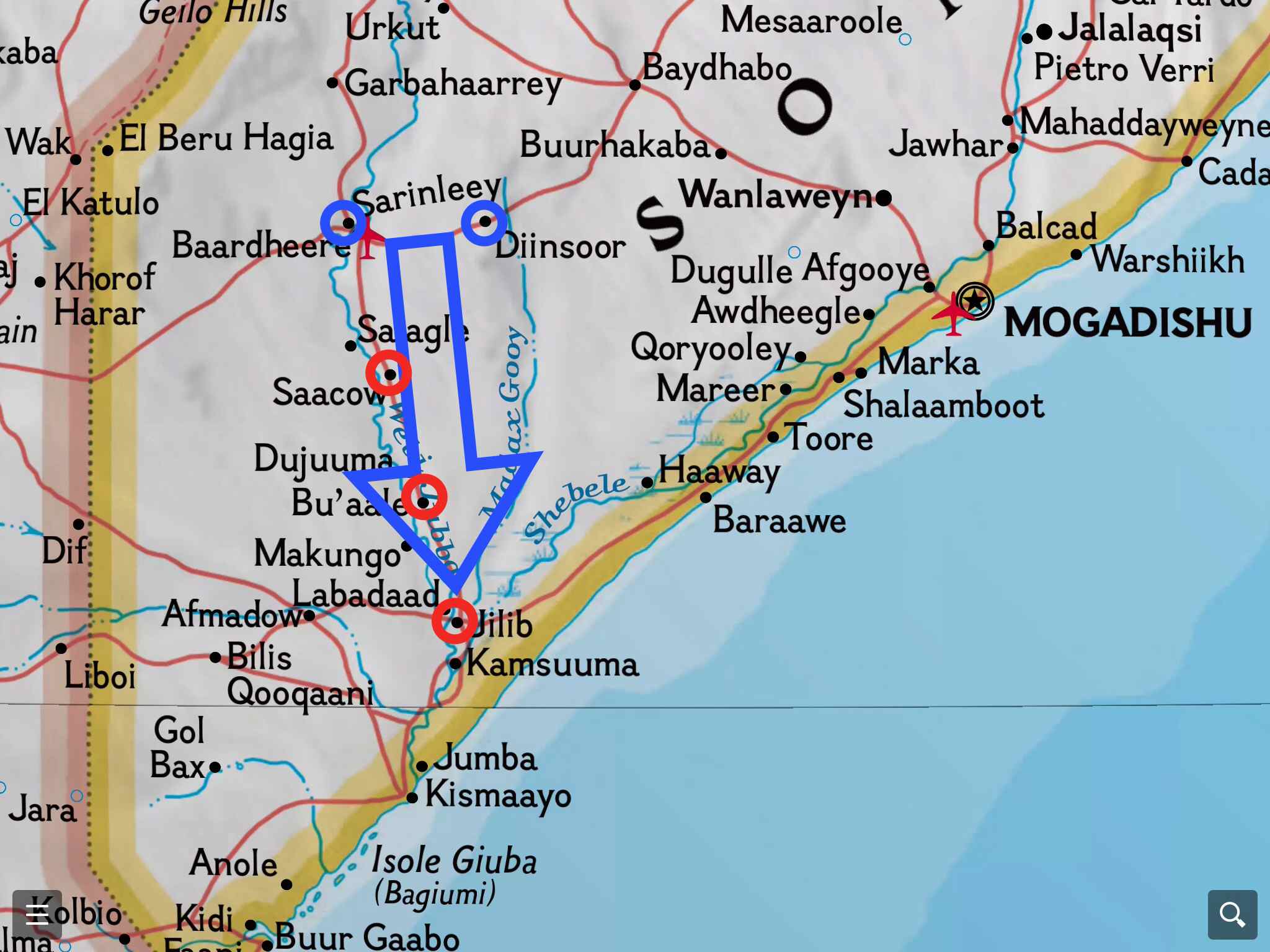
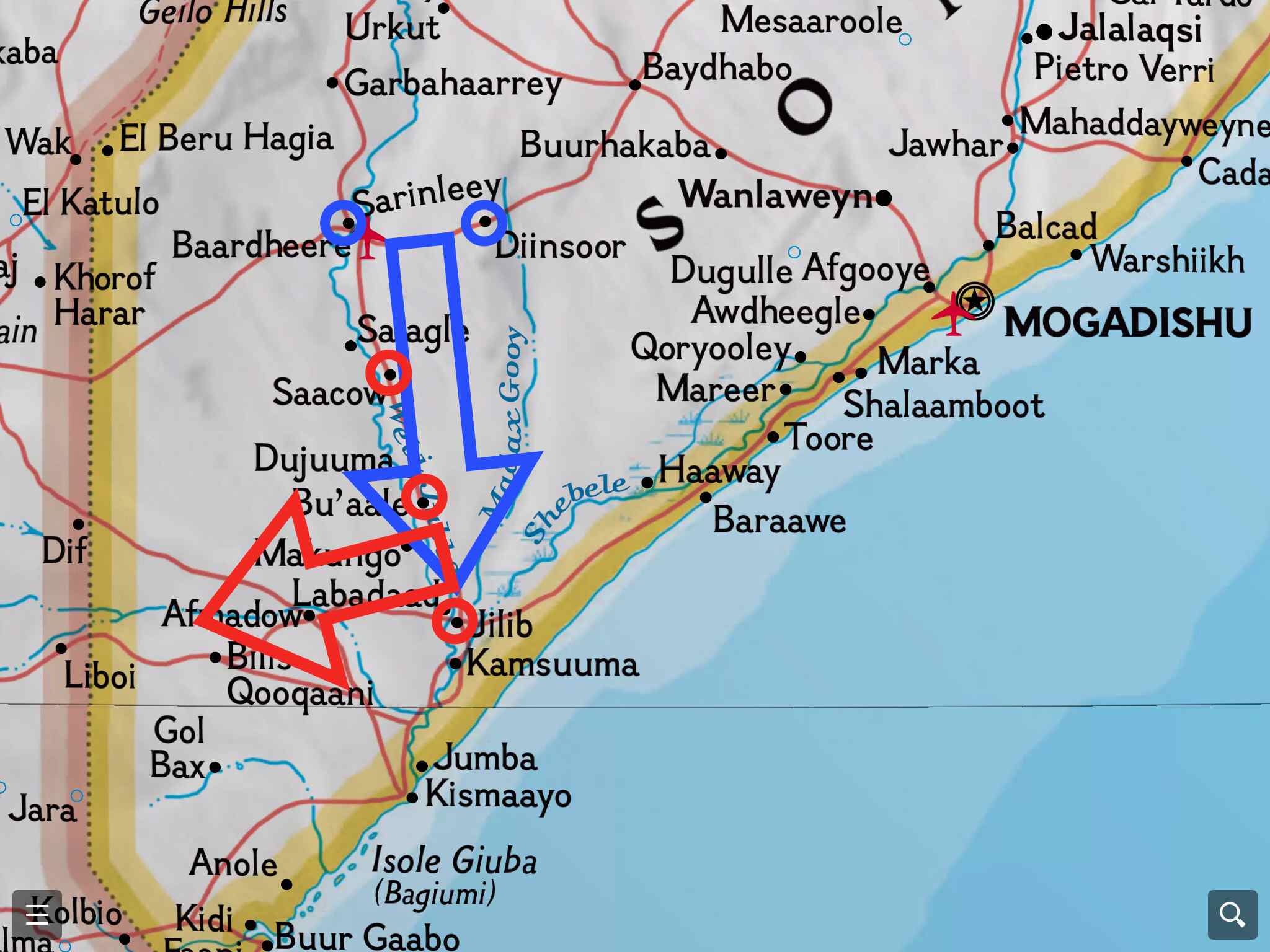
With the fall in rapid succession last week of the towns of Baardheere and Dinsoor to the Somali National Army (SNA), supported by the African Union Mission in Somalia (AMISOM), it would appear that al-Shabaab is going through one of its periods of tactical withdrawal or, to be more accurate, re-posturing in the face of overwhelming military force. But nothing is ever quite as it seems in Somalia, particularly once you move out of the major cities, once you get off the road and into the bush (a metaphor that will recur in this piece). The SNA and AMISOM have claimed the seizure of Baardheere and Dinsoor – but what do the terms SNA and AMISOM mean in real terms in the hinterland of Bay and Gedo and Jubba? In the case of Baardheere it seems to have meant Interim Jubba Authority forces (formerly the Ras Kamboni militia, now fighting under the flag of the regional administration) supported by Kenyan Defence Forces airstrikes: in the case of Dinsoor it seems to have meant the Suffist militia, Ahla Sunna wa-Jama, supported by the Ethiopians. Across both operations, the US struck at targets with drones. The extent to which this was a coordinated operation between the SNA and AMISOM is debatable: it seems suspiciously like militias and the neighboring countries who capriciously support them, with the occasional Hellfire thrown in for good measure, latterly retrofitted with an operational name (‘Operation Jubba Corridor’) and a sense of an operational plan unfolding. The fact that both Ethiopia and Kenya have felt the sting of al-Shabaab in the past few months and feel obliged to retaliate adds credence to this reading of events. Or maybe it was planned back in Mogadishu. It just doesn’t feel like it. IMG_1240

SNA/AMISOM recently seized Baardheere & Dinsoor – or did they?


Al-Shabaab’s response was familiar. Its attempt to force a bloody urban denouement upon AMISOM during Ramadan 2011 badly backfired (although it was, nonetheless, bloody) and al-Shabaab’s response to its catastrophic losses was to simply melt away, mostly into the hinterland, some into plain clothes and anonymity of the urban environment. The successive AMISOM operations in 2014 to secure swathes of the countryside, first ‘Eagle’ and then ‘Indian Ocean’, were met with similar ‘tactical withdrawals’ and major objectives like the coastal town of Barawe were taken with little resistance. So too in Baardhere and Dinsoor, an orderly retreat. Radio Andalus, one of al-Shabaab’s propaganda nodes, was quietly shifted out of Baardhere and relocated, allegedly to Saaco, further down the Jubba River valley and towards the coast. But al-Shabaab is running out of places to withdraw to: Saaco, Bu’aale and Jilib along with a few villages along the way are all that remain in terms of conurbations. After Jilib there is only the sea. Admittedly, Jilib will be the proverbial ‘hard nut to crack’ – in the delta of the Jubba and Shabelle Rivers with the key crossing point being a bridge in the town of Kamsuuma, Jilib would be easy to defend. But it seems unlikely that al-Shabaab will choose to defend.


Advancing Thru Thicket

Al-Shabaab fighters move through the concealing scrub that covers much of the south of the country

Looking at the map and going on the images we have built up from the mass media, Somalia probably seems flat, featureless, a wasteland. But maps can be as deceptive as media reporting occasionally is, and the presence of the Jubba River challenges those preconceptions of Somalia being an arid expanse. Some parts of Somalia are indeed arid expanses. But major rivers, notably the Jubba and the Shabelle, crisscross southern Somalia and not so long ago the country was a bread-basket for the region. (Somalia, in fact, was once the world’s largest producer of bananas. You don’t achieve that status by being a wasteland.) But 25 years of chaos left the country disorganized and vulnerable to natural disaster. Just for good measure, al-Shabaab targeted the minority clans who specialized in farming. Agriculture collapsed. But much of southern Somalia, outside of the conurbations and roads, is scrub, highlighting the adage about the difference between the map and the territory.


If you have had the displeasure of viewing any of al-Shabaab’s most recent videos, which focus on ambushes of AMISOM convoys in a rural environment, you will be familiar with this scrub. Patchy, but generally above head height. Through this maze-like terrain the al-Shabaab fighters plan, scout, ambush. AMISOM Monging

AMISOM forces ‘monging’ while under fire

And it is from this angle, through the bushes, that we see the AMISOM troops through an al-Shabaab viewfinder: their armoured vehicles immobilized, they flounder, wander without aim as they are simultaneously filmed and fired at by al-Shabaab. At not point in either video do AMISOM troops appear to return fire, but that might be clever editing. The al-Shabaab fighters, on the other hand, seem confident and capable in this environment: orders are given around a model that would score highly at Brecon; every RPG round that is fired is celebrated with a fist-bump to camera; one fighter even pauses to bow down and offer a prayer in the midst of firing at the paralysed AMISOM troops. This terrain is definitely home to al-Shabaab, like the mountains are to a jaeger. It is into this terrain that al-Shabaab will most likely dissolve for the next phase of the campaign. Most likely they will shift southwest, towards the Boni Forest, a huge tract of land that was formerly a national park, an area that straddles the border with Kenya. At the same time others will dissolve into the cities. (The urban campaign is a different matter, requiring a different approach – and a different blog post.) IMG_1241

The most likely course of action for al-Shabaab: withdrawal into the bush


As al-Shabaab shifts away from the pretense of controlling territory, the SNA and AMISOM will be required to adopt different tactics, ones learnt and unlearnt in cycles by western forces, most recently in Iraq and Afghanistan. For the SNA, only now forming its first full integrated, multi-clan units and still woefully under-manned, under-equipped and under-trained, the shift to counter insurgency is probably still beyond their capabilities: conventional war still escapes them. But they do have the advantage of being part of the communities they will operate amongst, and that could be critical. AMISOM, on the other hand, stands a better chance of adapting to the nature of counter insurgency since many of its contributing nations have experience of bush wars (notably the Ugandans): but there is still an element of chance. AMISOM is lacking in critical equipment, particularly air power but also in communications, command and control and other key areas. But they do have the will to fight, as they have proven on countless occasions. If they can adapt to the changing nature of the fight they, along with the SNA, have a chance of placing a limit on the influence al-Shabaab can wield from the bush. A starting point would be permanently securing the areas they have recovered, not just during daylight hours (one of those cyclical lessons western forces re-learnt too late in Afghanistan).

‘BREAKING: Tonight #AlShabaab are back in at least 11 villages/towns in Bay & Gedo regions captured by #AMISOM troops this week,’

Reported Hamza Mohammed of al-Jazeera on July 23rd, just after the fall of Baardhere and Dinsoor. This fleeting experience of government influence is something that Afghans would recognise and it is makes a mockery of claims of a dividend in recovered areas. Along with security, the umbrella under which all other facets of governance can shelter, providing something tangibly different to what went before under al-Shabaab is desperately important but has, up to now, failed to materialise. But it is not too late: plans for ‘governance in a box’ exist, shipping containers ready to open up and reveal a clinic, a court, a school. They just need to be implemented , or ‘government’ will come to mean something that only exists in the daytime, surrounded by soldiers and not worth the risk of nocturnal retribution for ‘collaboration’. But it is not just the recovered towns, it is the arteries that run between those towns that will be critical to consolidating the recovered areas. The symbolism of securing those routes in the consciousness of the population in the hinterland cannot be understated. Many of the previously recovered towns exist under a state of siege. To achieve this, the SNA and AMISOM will have to adapt and the will also have to take the battle to al-Shabaab: they will have to get out of their vehicles, get off the road and head into the bush: literally and metaphorically. RPG Fist Bump

An al-Shabaab fighter gives a fist-bump in celebration after firing an RPG at an AMISOM vehicle

‘Are you Filming?’ ‘We’re Always Filming’

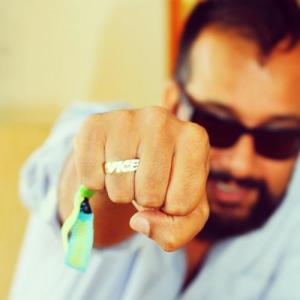
Vice Ring

A DAY OUT WITH VICE NEWS

‘These men are pornographers?’ says Abdi, one of the President’s comms team.

‘No, it’s just an attention grabbing name. It’s like Virgin. People used to think that was risqué.’

‘I don’t know… In fact, no, the President won’t see these people. As you say, it is risky.’ I know better than to try to clarify the homophone.

Moving down the feudal pyramid from the President in search of someone who is willing to speak to the Vice News crew, it gets no easier.

‘Vice did those great videos on the Islamic State.’

‘They make the videos of the beheadings, the burning of that pilot alive?’

‘No, I mean –‘ More rejection.


But we get there in the end – after completely re-organising the programme. The Minister for Planning, Abdi Aynte, is a former Jazeera journalist and also happens to have written his Masters thesis on the origins of al-Shabaab, so the pornographers/IS horror video producers get a decent insight into where the organisation came from, where it is now and where it might be going. And the government gets an input. Which is important.

Because Vice News, to those who are familiar with them, are neither pornographers or the PR team for Da’esh but are instead the spearhead of a kind of digital gonzo movement that is making news interesting again. (That’s ‘gonzo’ as in Hunter S Thompson, not as in porn.) Their material on the fighting in Ukraine was outstanding: their inside account of life under IS as alarming as it was riveting (their journalist had to take a break after filming, having got ‘a bit too close’.) And they will make this documentary whether the government cooperates or not.

A UN chum improvises a trip to a Defector Rehabilitation Camp in Baidoa, out in the hinterland of Somalia towards the Ethiopian border, and the trip coalesces into something. Vice News are happy.

It’s important that they are happy because the devil will find work for idle meeja to do if their ‘handlers’ don’t keep them occupied. They might end up filing a different story entirely. Like a story about all the boozing and shagging that goes on in the Mogadishu airport compound, where the UN and various embassies are hubbed, a story that came about because a journalist wasn’t kept occupied.

Or it might be a revenge story, as happened to an erstwhile colleague of mine back in Iraq in 2005 in the aftermath of two British SF soldiers being lifted by the shady Iraqi cops they were meant to be spying on, plunging the city into days of rioting. His opening gambit to the assembled ladies and gentlemen of Her Majesty’s Press: ‘You’ve been foisted upon us so don’t expect us to happy that you’re here.’ His reward: a feature on him and how shit he was.

*      *      *

In the back of the armour we chat about the interview with Aynte.

‘Some of his comments were obviously party line,’ says Suroosh Alvi, the host of the programme that is being filmed (‘TERROR’: a major documentary series on TERROR), who also happens to be one of the founders of Vice. ‘But very good, you can tell he was a journalist.’

Which is interesting, as the Vice crew (or should it be ‘VICE’, because that’s the way it’s cast on Suroosh’s trademark signet ring) pride themselves on not being trained journalists.

And that makes for a very different media visit from what I am used to (it’s been a while since I did any media handling) and also from what the private security company that is driving us around is used to as well. The mainstream media have become so bureaucratised, with all their disclaimers and risk assessments and their entourage of security advisors that their trips have become a breeze, since their masters are so risk averse and they have been brought up with the pernicious ‘embed’ as the norm.

But Vice are different. They have to be restrained from dashing to the Jazeera Palace Hotel when an al-Shabaab truck bomb peels the frontage off, killing 15. (But they get there later.) They are nearly in tears when we have to board the plane back to Mogadishu, a plane we cannot miss (unless we fancy a 5 day layover in Baidoa): the commander of the Ethiopian garrison offers to let them go up in an attack helicopter to see some action. But they got to meet some real, live al-Shabaab defectors, so the disappointment quickly passes.


The conversation in the armour drifts to the realities of the campaign against al-Shabaab. I nearly have an unguarded moment, but something from years ago, maybe the Defence Media Operations course, kicks in.

‘Are you filming?’ I ask the cameraman, Chris, who is squashed into the boot of the armour so Suroosh and I can sprawl on the back seat (and so Suroosh can do a piece to camera if need be).

‘We’re always filming,’ they reply, in unison.